The Lie We Were Taught: Risk Reward Ratio Trading Explained
In school, accuracy is everything, but in this risk reward ratio trading guide, we’ll see why math beats guessing.
Well, in trading, that mindset is the fastest way to execute your own account.
Most beginners are obsessed with being “right”. They want to be market prophets. But the brutal truth is that in trading, you don’t need to be a fortune teller—you just need to be someone who can operate a basic calculator.
Visual Logic: When Math Outweighs Your Ego
Forget the crystal balls and look at the raw numbers over a sample of 100 trades:
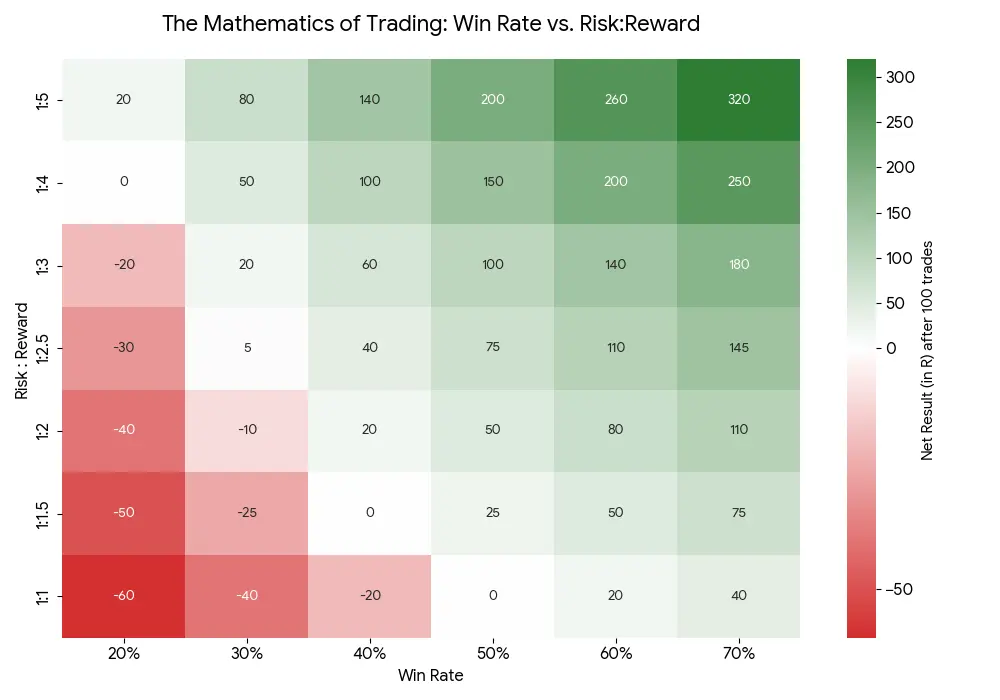
The Trap (Red Zone)
Look at those trying to play it “safe” by taking tiny wins. Even if you’re right 40% of the time, if you trade with a 1:1 Risk-Reward ratio, you’re slowly bleeding out. You’re working hard just to make your broker rich while you collect the stress.
The Freedom (Green Zone)
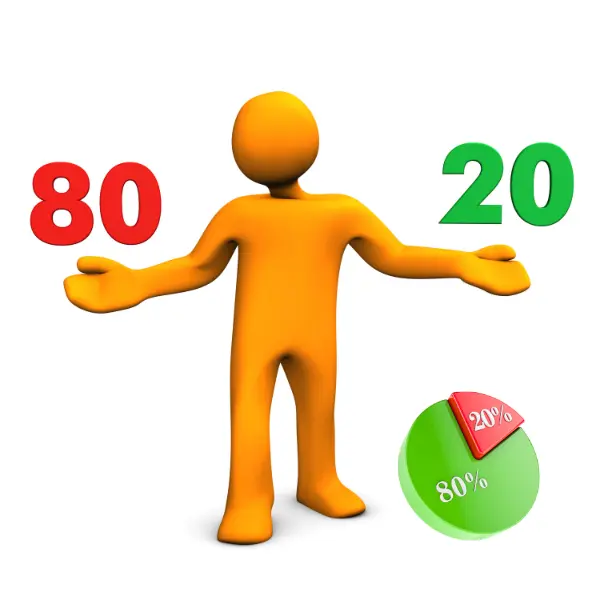
Now look at a disciplined approach. Imagine you are wrong 70 times out of 100. In a classroom, you’d be kicked out. But if your winning trades are three times larger than your losers (1:3 RR), you end up with a solid 20R net profit.. It’s the only profession where you can be a “D student” and still have a healthy bank account.
A Sustainable Approach
When traders burn through their funds, it’s usually not bad luck—it’s guessing. Professionals focus on Survival First.
- Measuring Over Guessing: It honestly doesn’t matter what your gut says about the price. A math-based decision starts by checking if the setup offers at least a 1:3 Risk-Reward. If the numbers don’t add up, staying on the sidelines is often the smartest move.
- Guardians of the Strategy: Experience shows that the most dangerous thing you can do is increase risk where the fundamental rules of a disciplined strategy don’t give a clear signal.
- Loss is Overhead, Not Failure: Treat a loss like a shop owner treats the electric bill. It’s just the cost of doing business. As long as you stay in the high RR zone, the statistics will do the heavy lifting for you.
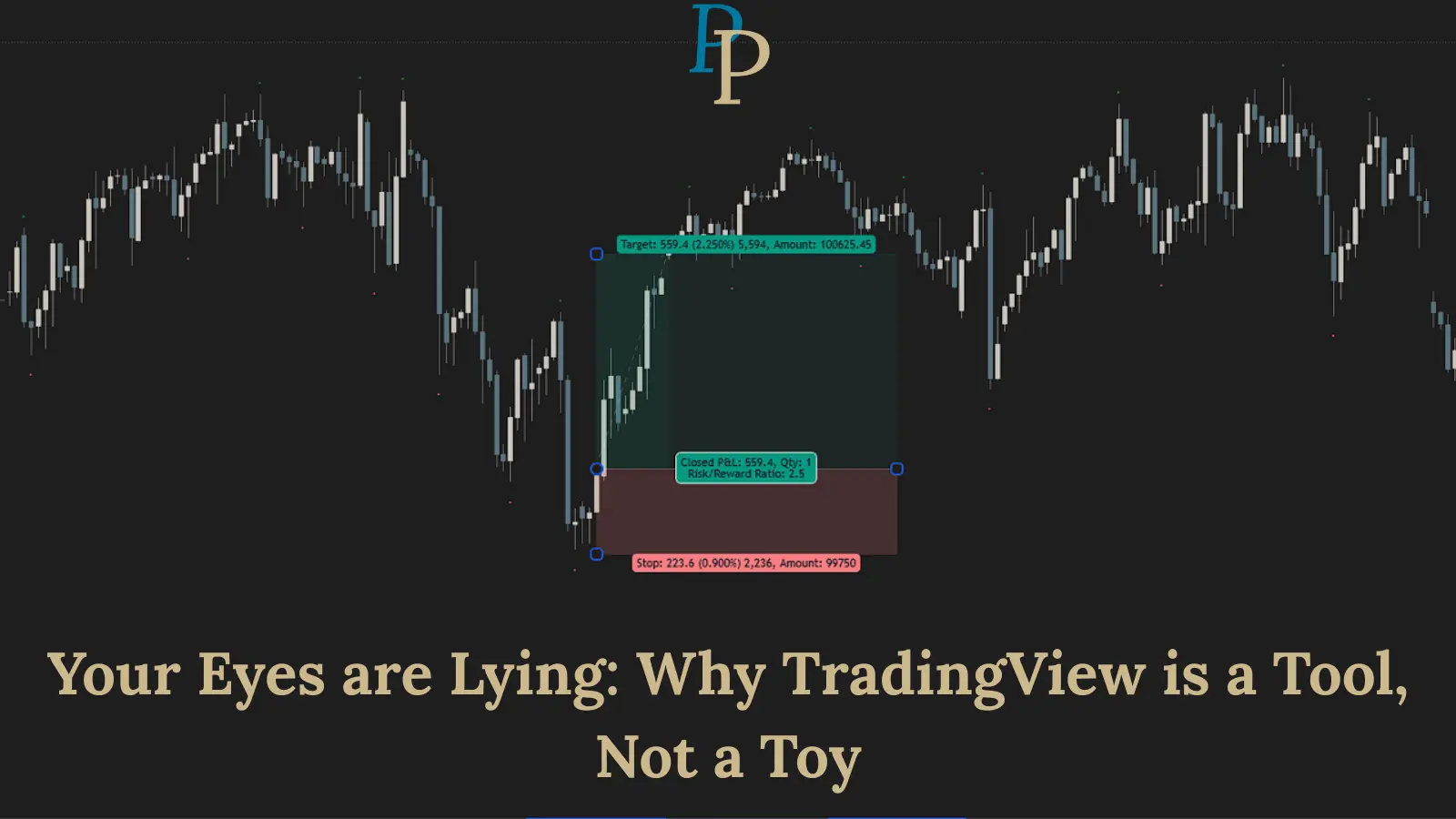
- Visual Tools: The TradingView “Long/Short Position” tool isn’t there for decoration. If that green box isn’t at least 2,5 or 3 times bigger than the red one, the trade is likely not worth your time.
Conclusion
You don’t need a magic wand; you need a strategy and a bit of discipline. Don’t try to be “smart”—try to be profitable.
If you’re looking for a firm that values this mathematical discipline, check out The 5%ers. They know that consistent payouts and transparency are what sustain their community, so it’s in their best interest to see you succeed as a disciplined trader.